

A small green ribbon on a jacket can start a conversation that months of silence never did. That is the job of a mental health symbol. It tells people they are not alone in their challenges.
The most common symbols are the green ribbon, the semicolon, the butterfly, the lotus flower, and the yellow ribbon. Each stands for something specific, such as hope, recovery, or suicide prevention. People wear them or tattoo them. They also share them online to show support and make mental health easier to talk about.
Symbols work because anyone can recognize them in a second. That is why awareness campaigns are built around them.
This blog covers what each symbol means, how color shapes its message, and how organizations use these symbols in logos and campaigns.
What Are Mental Health Awareness Symbols?
These are graphic icons that represent mental health. The icons support people with mental illness or a specific cause like suicide prevention. These symbols make a hard subject visible. This way, people can show solidarity without needing the right words.
You will see these visual icons in three places:
- On ribbons and pins during awareness months
- On social media profile frames
- On logos for clinics and nonprofit organizations
Some symbols cover mental health as a whole. Others point to one condition, such as anxiety or suicide prevention. So, knowing the clear difference helps you pick the right one.
What Is Green Ribbon in Mental Health?
The green ribbon is the widely recognized symbol for mental health awareness. This fits the idea that recovery is possible. Here is what it shows:
Hope and Renewal: The green color shows growth and the belief that people can heal.
Ends Stigma: Wearing the ribbon shows solidarity. It also encourages them to talk about daily challenges
Safe spaces: Displaying the green ribbon shows a safe space open for conversation.
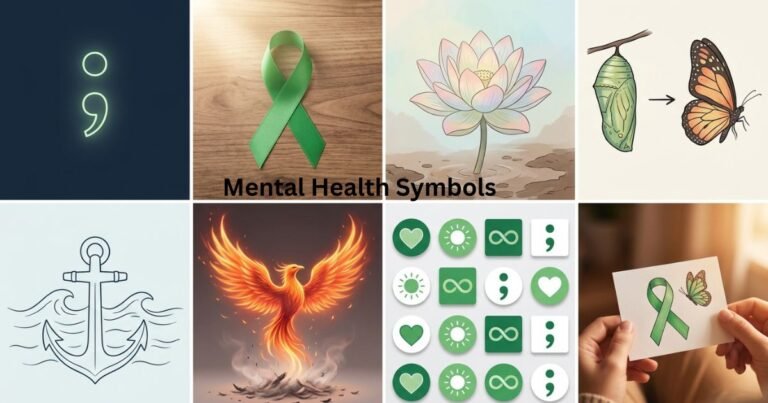
7 Most Common Mental Health Symbols
Each symbol conveys its own message according to the condition. The most common include the following:
Semi Colon
A semicolon is usually used when a writer could have ended the sentence but chooses to continue. That’s why this symbol is used for people who are still here after struggling with depression or other mental health disorders. Every individual carries the symbol according to their own struggle. For instance:
- Some wearers mark their own past
- Others mark a current fight
- Few honor someone they lost
Butterfly
A butterfly goes through a complete change before it flies. This makes it a sign of transformation, hope, and healing. It teaches resilience, just like the wings of a butterfly that are apparently fragile but require a great deal of internal strength to fight mental health battles.
Lotus Flower
This flower grows through muddy water and rises clean above the surface. It represents strong resilience and the ability to grow through hard times. A mental health professional uses lotus visualizations to help individuals acknowledge their trauma without any judgment.
Yellow Ribbon
The yellow ribbon is the global symbol for suicide prevention awareness and support. It represents that someone cares and is willing to listen to you.
Teal Ribbon
In mental health, the teal ribbon is used to raise awareness for different mental health conditions such as anxiety disorders, post-traumatic stress disorder (PTSD), and obsessive-compulsive disorder (OCD). It encourages individuals to talk about mental health challenges without hesitation.
Infinity Symbol
In mental health, this represents healing, personal growth, and the gradual process of recovery. It reflects the idea that recovery is an evolving process without a fixed endpoint. The symbol also represents resilience and continued hope.
Phoenix
The phoenix is a bird that burns and then rises again from its own ashes. This story makes it a symbol of rebirth after hardship. You’ll see it in trauma healing spaces and in tattoos worn by people who have come through a hard chapter. It carries a message of hope.
What Do Colors Mean in Mental Health Symbols?
Color carries most of the meaning in mental health symbols. A ribbon shares the same shape as a dozen other awareness ribbons, but the color tells you the cause.
Green: growth, renewal, and hope, used for general mental health awareness
Yellow: warmth and optimism, used for suicide prevention
Teal: calm and steadiness, used for anxiety and PTSD awareness
Blue: trust and stability, common in clinic and healthcare branding
What Do Mental Health Awareness Logos Usually Include?
Most mental health awareness logos combine a human figure with a symbol of growth, care, or calm. The major goal is to look warm and approachable instead of being too clinical.
Common design elements include:
- A head silhouette with a plant, heart, or light inside it shows mind and well-being.
- A brain outline is sometimes paired with a heart to balance thought and emotion
- Open or upward shapes such as leaves, wings, or rising lines in logos suggest hope
- Two hands or a circle of figures show community and support
When Are Mental Health Awareness Symbols Used Most?
Symbols appear most during set awareness periods. These dates give organizations a reason to speak up and give individuals an easy way to join in.
May: Mental Health Awareness Month in the United States. It is marked by the green ribbon
September: Suicide Prevention Month. It is represented by the yellow ribbon
October 10: World Mental Health Day is observed around the globe
Throughout the year: Individual symbols like the semicolon and butterfly that people carry with them daily.