

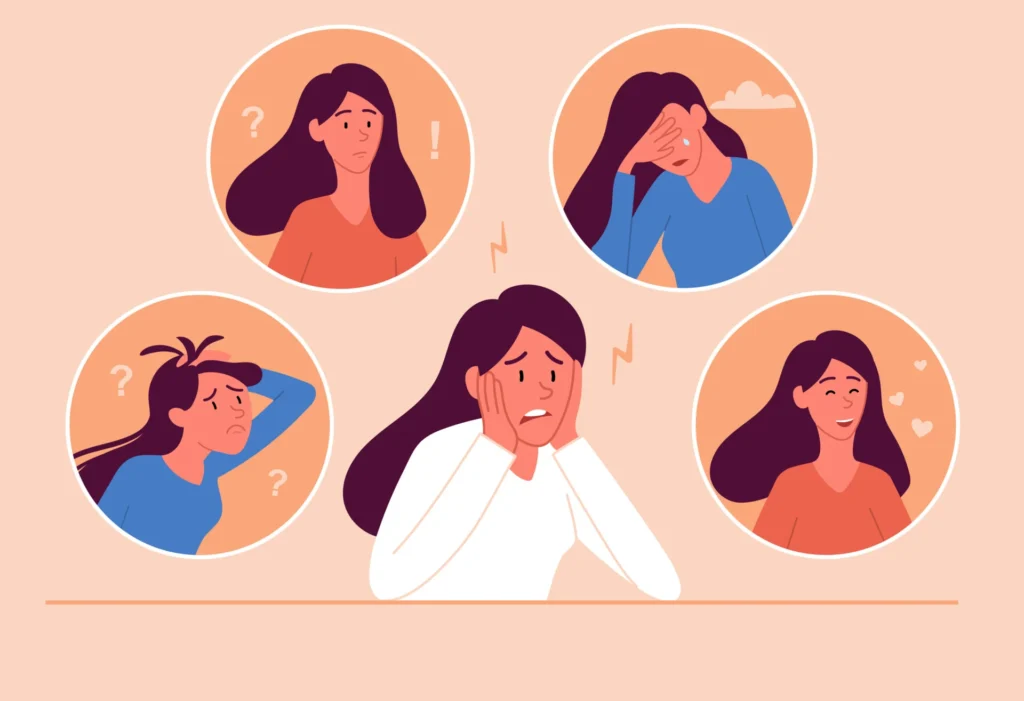
Mood disorders don’t always show up as sadness. They can also cause physical aches, irritability, difficulty keeping up with daily responsibilities, or a persistent feeling of emotional numbness. These symptoms are often mistaken for everyday stress or fatigue. That’s why they go unrecognized for months or even years. Recognizing the hidden symptoms of mood disorders can help you understand what you’re experiencing and when it’s time to seek professional mental health support.
What Makes Mood Disorder Symptoms Easy to Miss
A mood disorder is a mental health condition in which the mood stays persistently disturbed and disrupts daily life. The symptoms stay hidden because they are perceived as some other reason. Tiredness gets blamed on a busy schedule. The DSM-5-TR sorts these conditions into the following groups:
- Major depressive disorder: low mood lasting at least 2 weeks
- Persistent depressive disorder: a lower-grade depressed mood lasting 2 years or more in adults
- Bipolar I disorder: at least one manic episode of 7 days or longer
- Bipolar II disorder: at least one hypomanic episode and one major depressive episode
- Cyclothymic disorder: milder highs and lows that continue for 2 years or more
Hidden Physical Symptoms of Mood Disorders
Mood disorders affect your body as well. The physical symptoms include the following:
Exhaustion that is not fixed by sleep
Fatigue is one of the most common physical signs. But it is one of the least linked to mood. This tiredness survives a full night of sleep. Even answering a text feels heavy. A shower feels like an achievement. Many people see a doctor for low energy before anyone asks about their mood.
Headaches
Headaches caused by stress and depression feel like a tight band of pressure around the head. Depression also raises the risk of migraine. Migraine raises the risk of depression. The two feed each other.
Body aches with no medical cause
Sore necks, tight shoulders, back pain, and upset stomachs often follow a mood disorder. Stress hormones and changes in brain chemistry affect the body directly. These symptoms are real. They are not imagined.
The Quiet Signs of Depression
Depression often shows up without warning. A person can smile, answer emails, and attend every meeting while feeling empty inside. A mental health professional calls this high-functioning depression.
Emotional Numbness
A few people with depression do not feel sad at all. They feel nothing. They describe watching their own life through glass. This numbness confuses people who expect depression to feel intense.
Not feeling joy
Mental health professionals call the loss of pleasure anhedonia. It is a core symptom of depression. A vacation, a holiday, or a dinner with friends used to bring anticipation. Now it brings a shrug.
Emotional Symptoms of Mood Disorders
Mood disorders involve more than just sadness. A mental health provider looks at emotional patterns during an evaluation because they can help identify the underlying condition.
Irritability in Place of Sadness
Anger is often the first emotion to show. A short fuse at home, snapping at coworkers, and frustration over small things all count. Teenagers and men in particular show depression this way. But this behavior is mostly labeled as attitude.
Guilt That Never Lets Up
Some people replay one small mistake for days. Others feel guilty for resting, as if they owe the world more effort. Even high achievers carry a private sense that they are falling short.
Tears With No Clear Trigger
Crying with no obvious reason is a recognized sign. So is the opposite: feeling flat at a birthday or a promotion.
Behavioral Symptoms of Mood Disorders
The behavioral symptoms of mood disorders change what a person does. Family and friends tend to see these shifts before the person does.
Pulling Away From People
A person cancels the plan at the last minute, even plans the person wanted. Isolation brings loneliness. Loneliness brings self-blame, and the cycle repeats.
Packing the Schedule to Avoid Quiet
Not everyone slows down. Some people stay busy because silence lets hard feelings in. A person who works late every night may be avoiding an empty feeling at home. Staying busy does not prove someone is doing well.
Coping With Alcohol
An extra drink every evening, reckless driving, and gambling can all signal an underlying mood problem. None proves a diagnosis alone. A sudden, lasting change does deserve attention.
Cognitive Symptoms of Mood Disorders
Mood disorders can make it difficult to think clearly, stay focused, or keep up with tasks that once felt easy.
Brain Fog and Memory Slips
Missed appointments, lost threads in conversation, and trouble reading a page twice all fall in this category. Many people fear a memory disorder when depression or anxiety is the cause.
Trouble With Small Decisions
Choosing dinner, answering an email, or paying a bill can feel impossible. Mood disorders affect executive function. This is a symptom, not laziness.
Signs of Bipolar Mood Swings
Signs of bipolar mood swings differ from ordinary ups and downs. A bad morning that turns into a good afternoon is normal. Bipolar episodes last days or weeks and change sleep, energy, and judgment.
The DSM-5-TR defines a hypomanic episode as 4 consecutive days or more of elevated or irritable mood with increased energy. A manic episode lasts at least 7 days, or any length if hospitalization is needed.
Hypomania feels good, so it gets missed. Many people with bipolar II disorder seek help only during the depressive phase and receive treatment for depression alone.
Anxiety and Mood Disorders
Anxiety and mood disorders travel together more often than most people expect. Restlessness, poor sleep, and trouble concentrating appear in both.
Anxiety also hides depression. Constant worry is loud and demands attention. The low mood underneath stays quiet. A patient who overthinks every conversation receive care for anxiety only. A full evaluation checks for both from the first visit.
What are the treatment options for mood disorders?
Different approaches are used by mental health professionals to treat mental health disorders. At Advanced Health Preference Group, we use the following approaches and create a personalized treatment plan.
Psychotherapy
Cognitive behavioral therapy (CBT) helps people identify and change negative thought patterns. Interpersonal therapy repairs relationship strain that feeds low mood. Dialectical behavior therapy DBT) builds skills for handling intense emotion. Most people attend weekly sessions for 12 to 20 weeks.
Medication Management
Antidepressants treat depressive disorders. Mood stabilizers treat bipolar disorders. A psychiatrist adjusts the dose over several weeks and tracks results and side effects.
Lifestyle and Support
A steady sleep schedule, regular exercise, and real social connection each lower symptom severity. Family involvement keeps patients engaged with care. But these changes do not replace the treatment. They work alongside the professional treatment plan.
Take the First Step Toward Better Mental Health
Get an evaluation when symptoms last 2 weeks or longer, or when they interfere with work, sleep, or relationships. You do not need to prove you are suffering enough. If you have thoughts of harming yourself, call or text 988 right away.
You can talk to a mental health provider at Advanced Health Preference Group for professional care. Our psychiatric team provides accurate evaluation, diagnosis, and a treatment plan created around your symptoms and unique needs. We accept major insurance plans and welcome new patients as well. So, take a step towards better mental health and book your appointment with us.